
What Is a Unified AI API and Why Developers Need One
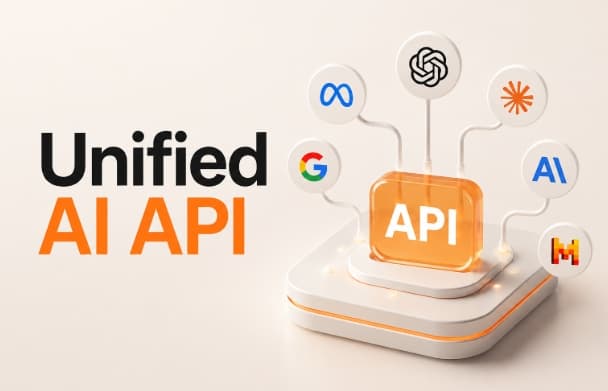
Developers now depend on more than one AI model to get work done. Some models handle coding better, some are stronger for reasoning, while others perform better for image generation, video, audio, and multilingual tasks. The challenge starts when every provider comes with its own API key, billing system, documentation, response format, and maintenance process. A Unified AI API solves this by giving developers one access layer for multiple AI providers. Instead of building separate integrations for OpenAI, Anthropic, Gemini, DeepSeek, Moonshot AI, Imagen, and others, teams can connect once and route requests through a single system. For developers, this means faster integration, easier model switching, cleaner usage tracking, and less infrastructure stress. Tokenware follows this approach by helping teams access, compare, and manage multiple AI models through one standardized API.
What is a Unified AI API
 A Unified AI API is a single integration layer that allows developers to access multiple AI providers and AI models through one standardized API. Instead of building separate integrations for providers like OpenAI, Anthropic, Gemini, DeepSeek, or Mistral, developers can send requests through one endpoint while the platform handles routing and provider management in the background.
This becomes especially useful in production environments where managing multiple providers separately creates operational complexity. Without a Unified AI API, teams often deal with different authentication systems, separate SDKs, inconsistent response formats, provider-specific rate limits, and fragmented billing structures.
A Unified AI API standardizes those differences into one workflow, allowing developers to spend less time maintaining infrastructure and more time building products.
How a Unified AI API Works The easiest way to understand a Unified AI API is to think of it as a central layer sitting between an application and multiple AI providers.
A developer sends a request once through a single endpoint. The Unified AI API then processes that request and routes it to the most appropriate provider or model. Once the model generates a response, the platform standardizes the output and returns it in a consistent format. Behind the scenes, the system may also handle logging, retries, failover, analytics, caching, billing, and monitoring.
In practice, the workflow often looks something like this:
- An application sends a request to the Unified AI API
- The AI gateway evaluates routing logic
- The request is sent to the selected provider
- The chosen AI model generates a response
- The Unified AI API standardizes the response structure
- Usage, token consumption, and analytics are recorded centrally
This matters because developers no longer need to rebuild their applications every time they experiment with new AI models or switch AI providers. A Unified AI API creates consistency across the entire development workflow.
Unified AI API vs Single AI Provider Integration
| Feature | Unified AI API | Single AI Provider |
|---|---|---|
| Integration Approach | One standardized API connects to multiple AI providers and AI models | Application connects directly to one provider’s API |
| Provider Flexibility | Easy to switch between providers without major code changes | Switching providers often requires rebuilding integrations |
| Supported AI Models | Access to multiple AI models from different providers | Limited to models from one provider |
| Infrastructure Complexity | Centralized routing, billing, and observability | Separate infrastructure management if additional providers are added |
| Authentication | Single authentication workflow | Provider-specific authentication system |
| Billing | Unified billing across providers | Separate billing tied to one provider |
| Failover Handling | Can reroute requests if a provider experiences downtime | Downtime affects the entire application unless custom failover is built |
| Cost Optimization | Requests can be routed to lower-cost models dynamically | Pricing depends entirely on one provider |
| Scalability | Designed for multi-model and enterprise-scale workflows | Simpler for small projects but harder to scale across providers |
| Vendor Lock-In | Lower risk due to provider flexibility | Higher dependency on one provider ecosystem |
| Best Use Case | Teams using multiple AI models or scaling AI infrastructure | Small projects or applications built around one provider |
What Developers Actually Gain From a Unified AI API
The biggest advantage of a Unified AI API is operational flexibility. Instead of building around one provider’s ecosystem, developers can work through a centralized layer that simplifies infrastructure management as AI systems scale.
Some of the main benefits include:
- Easier model switching: Developers can switch between AI models or AI providers without rebuilding large parts of their application infrastructure.
- Reduced vendor lock-in: Applications are not tightly coupled to a single provider, making it easier to adapt as the AI market changes.
- Centralized management: Teams can monitor token usage, latency, error rates, and costs across multiple AI providers from one system.
- Better cost optimization: Requests can be routed dynamically based on pricing, performance, or workload complexity.
- Improved reliability: If one provider experiences downtime or high latency, traffic can be rerouted to another provider.
- Faster experimentation: Teams can test and compare multiple AI models without maintaining separate integrations for each provider.
This flexibility matters because the AI ecosystem changes quickly. Pricing structures evolve, new AI providers continue entering the market, and model capabilities improve rapidly. A Unified AI API helps developers adapt without constantly rebuilding their infrastructure.
Common Use Cases for a Unified AI API

AI Writing and Content Platforms
AI writing tools often rely on multiple AI models for different tasks such as long-form generation, summarization, editing, translation, and tone adjustment. A Unified AI API allows these platforms to switch between providers without maintaining separate integrations.
Customer Support and AI Chatbots
Customer support systems use different AI models depending on conversation complexity. Simpler requests may be routed to lower-cost models, while more advanced reasoning models handle technical or sensitive queries.
AI Agents and Automation Systems
AI agents frequently require access to multiple AI providers for reasoning, planning, retrieval, and task execution. A Unified AI API simplifies orchestration by managing routing and model selection through one infrastructure layer.
SaaS Applications With AI Features
Many SaaS platforms now integrate AI-powered search, automation, analytics, or document processing features. A Unified AI API helps teams scale these capabilities while maintaining centralized billing and observability.
Research and Multi-Model Testing
Teams building AI products often compare outputs across different AI models to evaluate quality, latency, and cost. A Unified AI API makes experimentation easier by allowing developers to test multiple providers through one interface.
Cost Optimization Workflows
Companies managing large AI workloads often use multiple AI models strategically to control spending. Lower-cost models may handle simple requests, while premium models are reserved for advanced reasoning tasks.
How Unified AI APIs Help With Routing, Cost, and Billing
Cost management is one of the biggest challenges in AI infrastructure. As applications move into production, inference costs can scale quickly, especially when premium AI models are used for every request.
At the same time, the AI market is becoming more fragmented. Different providers like OpenAI, Anthropic, and Gemini each perform better in specific areas, while open-source models continue to improve rapidly. This makes it harder for teams to rely on a single provider without sacrificing flexibility or performance. Because of this, many developers now prefer a multi-model approach. However, managing multiple integrations creates operational overhead. A Unified AI API helps solve this by simplifying everything into a single integration layer
Smart Routing Across AI Models
Instead of sending every request to one provider, a Unified AI API can route tasks to different AI models based on complexity, speed, or capability. Simple queries can be sent to lower-cost models, while advanced reasoning tasks are directed to more powerful models. This improves performance while reducing unnecessary spending on expensive inference.
Cost Optimization at Scale
A Unified AI API helps teams manage costs more efficiently by enabling model selection based on pricing tiers, usage patterns, or predefined routing rules. Many systems also include optimization techniques such as caching, request reduction, and fallback routing to avoid overusing high-cost models when they are not required.
Centralized Billing and Usage Tracking
Instead of managing separate invoices and dashboards across multiple AI providers, a Unified AI API consolidates everything into one system. Teams can track token usage, monitor spending, and analyze cost trends across all AI models in a single view, making financial control much easier at scale.
What Makes a Good Unified AI API Platform?

When evaluating a Unified AI API, developers should focus on how well it handles real production needs, not just basic model access. A strong platform should provide:
- 1. Wide model and provider support: Access to multiple AI models across different AI providers, not just a limited set of integrations.
- 2. Reliable routing system: Ability to intelligently route requests based on cost, latency, or model capability.
- 3. Low latency performance: Minimal delay when switching between AI models or processing requests at scale.
- 4. Consistent API structure: A standardized format that removes the need to rewrite code for different providers.
- 5. Strong observability tools: Clear tracking of usage, errors, latency, and token consumption across all models.
- 6. Flexible cost controls: Options to manage spending through model selection rules or usage limits.
- 7. Easy scalability: Ability to handle increasing traffic without requiring major infrastructure changes.
- 8.Developer-friendly integration: Simple setup, clear documentation, and compatibility with existing workflows and LLM api systems.
Challenges Unified AI APIs Still Face
Even though the model is attractive, Unified AI API platforms are not perfect. Standardization has limits. Different AI providers still expose unique capabilities that cannot always be normalized cleanly. Some providers offer advanced tooling or custom features that may not fully map into a shared interface.
There is also the question of latency and reliability. Adding another infrastructure layer introduces another dependency between applications and providers. Because of that, developers still need to evaluate uptime guarantees, routing architecture, compliance support, security policies, and geographic infrastructure coverage before selecting a platform. Still, for many companies, the operational advantages outweigh the tradeoffs.
Examples of Unified AI API Platforms
Several platforms have emerged to help developers unify access to multiple AI models and AI providers through a single API layer. These tools are focused on simplifying integration, routing, and multi-model management in production environments.
| Platform | Best For | Main Strength |
|---|---|---|
| Tokenware | Developers who want unified access to many AI models | Multi-model access, OpenAI-compatible endpoints, pricing visibility, and model comparison |
| OpenRouter | Developers comparing many LLMs | Access to 400+ models through one API and fallback support |
| LiteLLM | Teams that want a self-hosted gateway | OpenAI-compatible proxy for multiple providers |
| Portkey | Production AI apps | Routing, fallbacks, logging, observability, and gateway controls |
| Together AI | Open model inference and deployment | Serverless and dedicated model inference for AI workloads |
Conclusion
The way developers build AI products is changing quickly. As more AI providers and AI models enter the market, maintaining separate integrations becomes harder to manage at scale. That is why the Unified AI API model is gaining traction. Instead of relying on one provider, developers can work through a single layer that simplifies routing, billing, observability, and provider management while reducing operational overhead. Platforms like Tokenware reflect this shift toward flexible multi-provider infrastructure. As AI adoption grows, Unified AI API systems and AI gateway architectures are becoming an increasingly important part of modern AI development.
Frequently Asked Questions
- What does a Unified AI API do?
A Unified AI API allows developers to access multiple AI providers and AI models through one standardized API layer instead of maintaining separate integrations for each provider.
- Is a Unified AI API the same as an AI gateway?
Not exactly. A Unified AI API focuses on standardized access across providers, while an AI gateway often includes routing, observability, governance, caching, and infrastructure management features. Many modern platforms combine both.
- Why are developers using multiple AI models?
Different AI models perform better for different tasks. Some are optimized for reasoning, some for coding, some for multimodal tasks, and others for lower-cost inference.
- Can a Unified AI API reduce costs?
Yes. A Unified AI API can help developers route requests more efficiently across AI providers and AI models, reducing unnecessary spending on expensive inference workloads.
- How does a Unified AI API prevent vendor lock-in?
Because applications interact through one standardized layer, developers can switch providers or AI models without rebuilding large parts of their infrastructure.
- Are Unified AI APIs useful for AI agents?
Yes. AI agents often rely on multiple AI models, reasoning systems, and external tools. Unified infrastructure helps manage those workflows more consistently.
- Can developers switch AI providers without changing their code?
In many cases, yes. Most Unified AI API platforms standardize request and response structures so developers can switch providers with minimal code changes.